DECO HOME STORY
The DECO HOME editorial team visits architect and interior designer Thomas Mang.
A conversation about the redesign of his own flat and the difference between designing his own living space – or that of his clients …
Mr Mang, how long have you lived here?
It’s been almost 13 years now.
What has changed with the redesign?
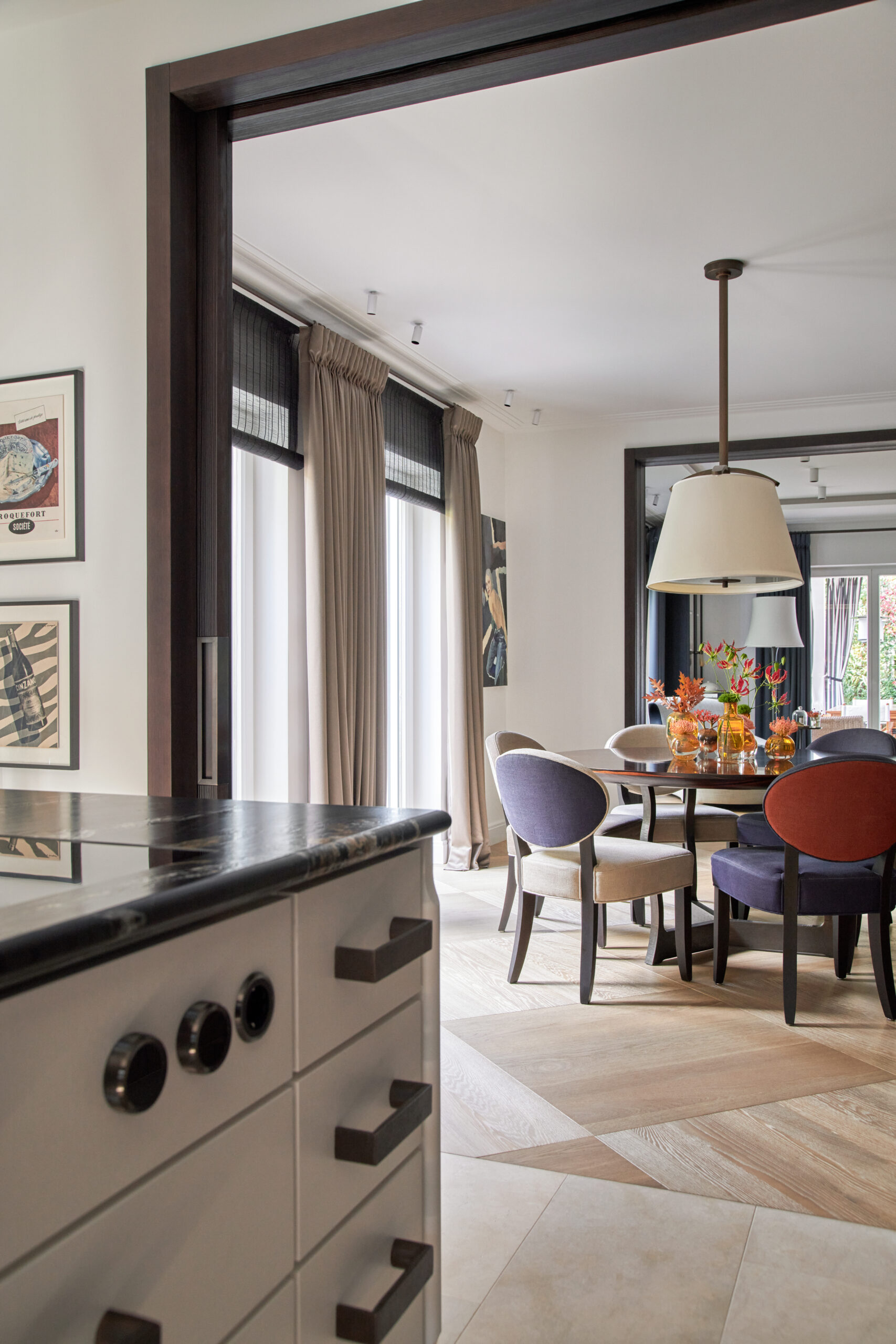
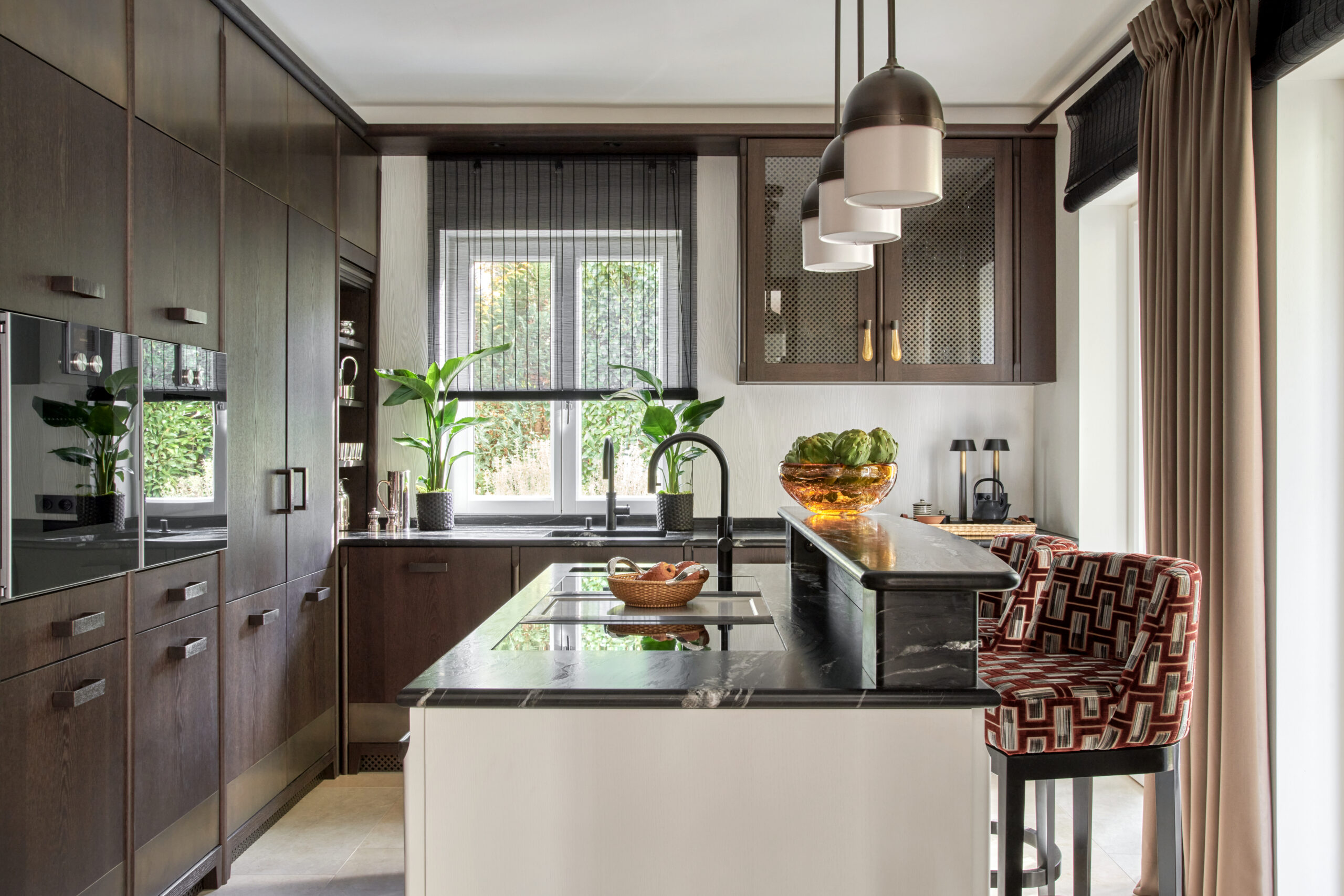
I’ve extended the living room by creating an opening. For the newly created kitchen, living and dining areas, I developed a completely new concept and applied it to the other rooms.
What defines the concept?
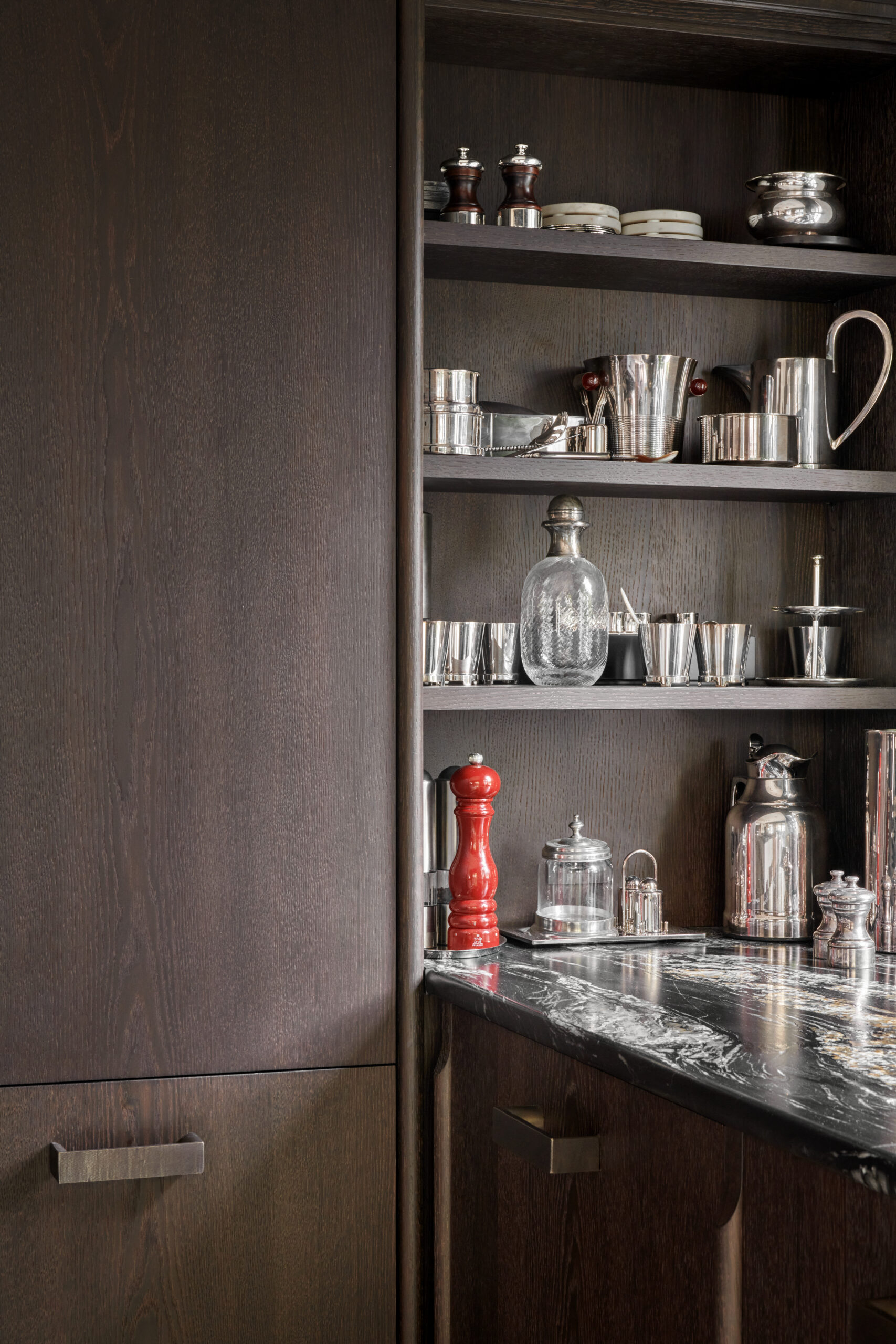
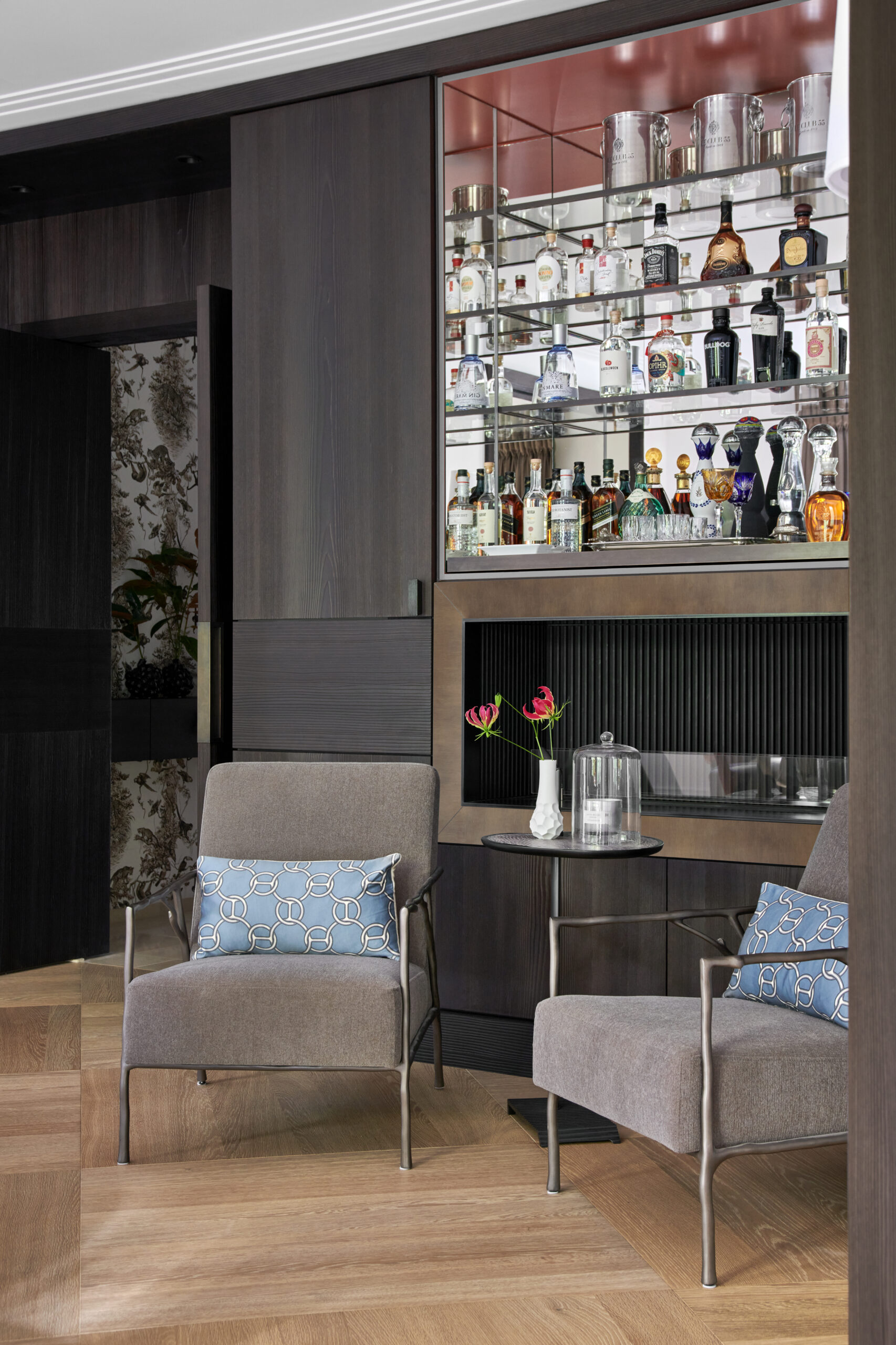
For me, a home must radiate warmth. I emphasised this idea during the planning stage by opting for warm surfaces such as brushed fir wood or light oak parquet flooring.
Combined with rich, high-quality fabrics, this creates a cosiness that makes me happy to come home.
What’s the difference between planning your own home and a client project?
With clients, it’s much easier to grasp what they want and implement those ideas accordingly. I find it harder when it’s for myself.
I know so many manufacturers and am aware of the options available – so it’s not at all easy to make up my mind. And although I studied architecture and designing interiors is my profession, when it comes to my own home, it’s simply a different matter.
You can fully express your own style. At the same time, my aim with every concept is to create something timeless. Nobody wants to have to rip everything out again in two years’ time.
How long did the renovation take?
I’d had a fairly clear idea for a long time of how I wanted the layout, the materials and the concept to be – but it still took longer to actually take the plunge.
I spent about a year preparing, and the renovation itself took just under eight months.
And would that have gone faster for a client project?
Of course! With clients, we have fixed timelines that we stick to. I deliberately allowed myself more time here to figure out what I wanted and what I no longer wanted.
The room that always takes the longest is the kitchen. Everyone has their own individual routines and ideas about how the appliances should be arranged and the workflow organised.
The kitchen is a very complex subject where direct and close personal consultation with the client is hugely important.
What are the key elements for you in interior design?
Whether in new builds or existing properties – we aim to create a sense of excitement. It starts with the floor plan. It’s perfectly fine to deliberately create a sense of intimacy here and there. Away from these completely open-plan spaces.
A centrally positioned fireplace or a narrowing in a hallway, where a special piece of art is then hung, are much more expressive.
We always try to create focal points to make proportions tangible. Without visual reference points, rooms can feel too empty.
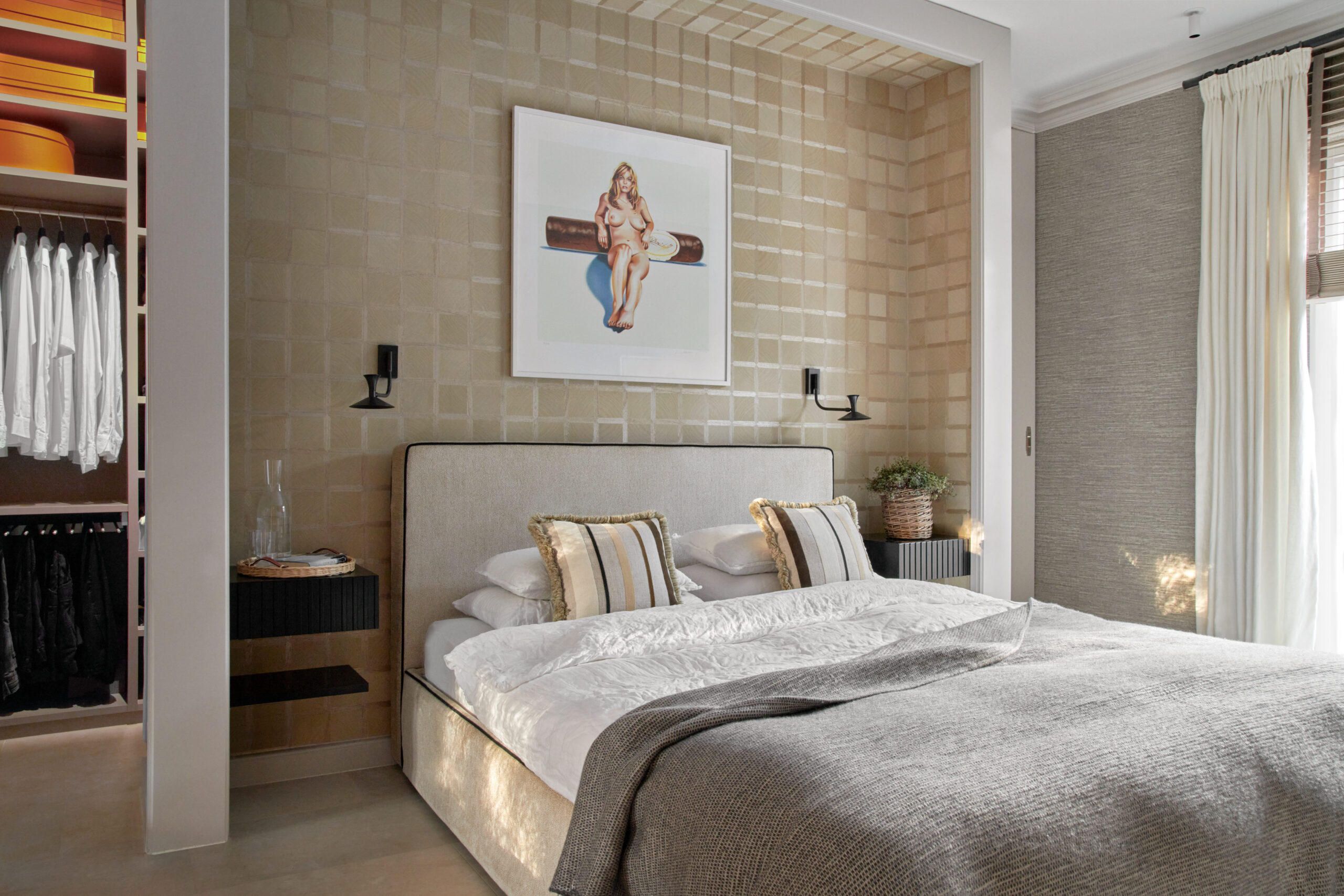
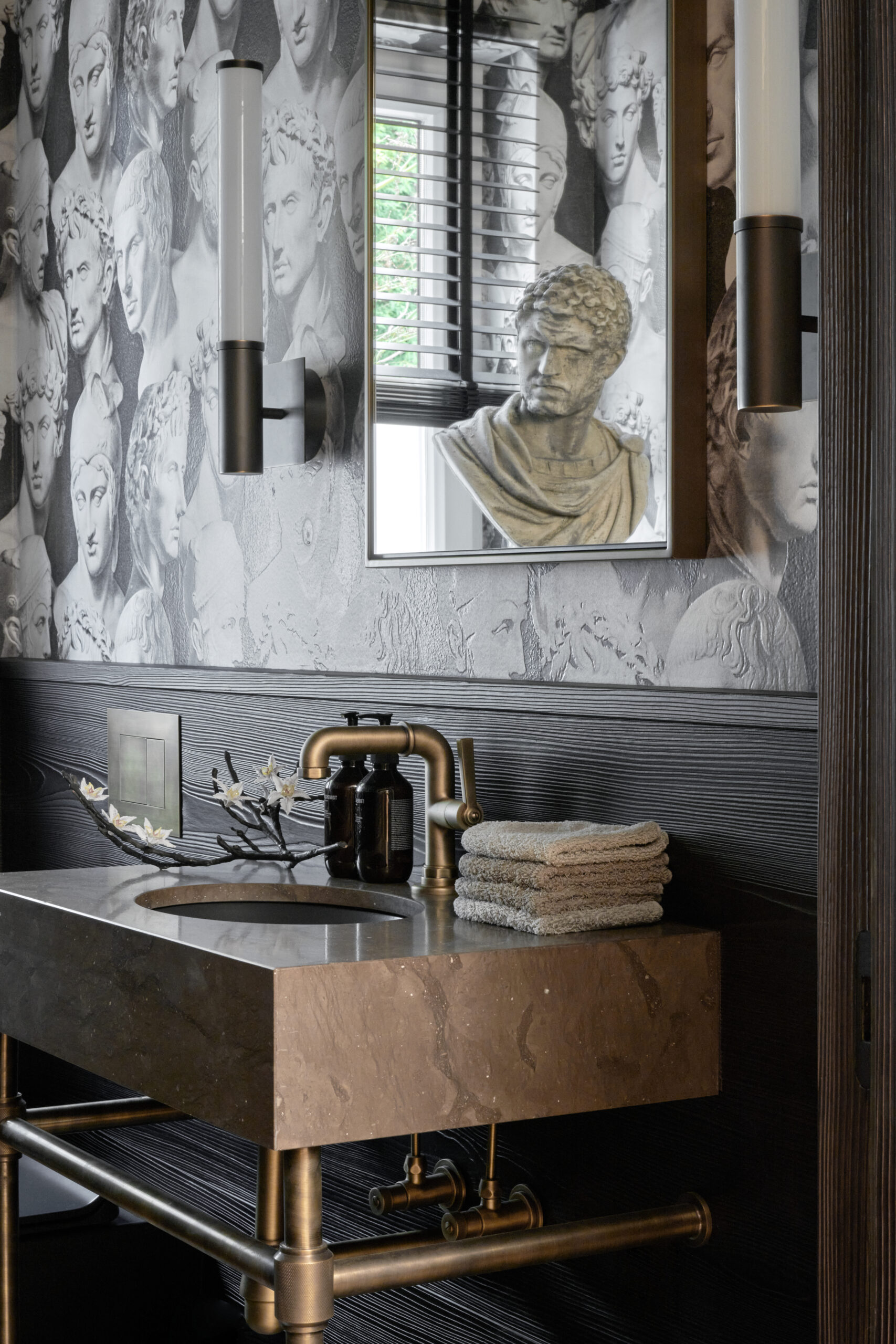
In interior design, I recommend continuing this tension with colours and materials. Be bold with colour! Not just white, beige and shades of grey. Add accents with wallpaper and fabrics.
Antiques and favourite pieces are also design elements that should not be underestimated. They reflect the individuality of the residents.
Are people more daring when they hire a professional?
Yes, many of our clients are very open to our suggestions and concepts. Of course, you’ll often hear the phrase: “I wouldn’t have dared to do that on my own.” Or: “I’d never have thought of that on my own.”
We’re always delighted to be able to provide someone with something unique for their home. What never ceases to amaze many people is that wallpaper or wall coverings create an extraordinary sense of depth and quality in a room.
Even a lightly textured wallpaper creates a completely different atmosphere.
So yes: those who are open to new ideas dare to do more, because we reassure them that it is possible and that there is no need to be afraid of colours or special finishes.
Keyword: Smart Home – is this an issue you have to address?
Of course, but the trend will surprise you. It is on the wane. The over-technologisation of homes is currently no longer desired, at least by our customers. People are trying to keep things as simple as possible again.
We’re keeping up with the times in this area, but are trying to focus more on craftsmanship and ease of use. To a certain extent, smart homes are helpful, but as soon as they become too complicated, they backfire. Here, too, it’s important to be clear: do I really need this, or do I not?
For me, the critical point is quickly reached, especially with lighting. We’ve all experienced this in hotels: when you can’t get to grips with the switches, you frantically press them and end up with either everything off or everything on. We connect a maximum of two to four lighting scenes.
What role does art play for you?
Art completes the overall look of an interior. In my view, it doesn’t necessarily have to be coordinated with the colours or rooms. After all, art always stands on its own.
Art can and should break the mould. Of course, it can be beautifully coordinated with the surroundings if that’s desired, and all the more so if clients already have art they like.
Fundamentally, art is like interior design: it’s all about the mix. Not everything has to be expensive – if the mix is right, the overall picture will impress with its vibrancy.
How do you personally approach art?
I grew up with art as a natural part of my life. My mother is very art-loving, and I hang art according to how I’m feeling at the moment and what I like. It ranges from photography to oil paintings – I’m open to everything. It just has to appeal to me.
There are few things where perception is as subjective as it is with art. We don’t impose our views on our clients either, but instead put them in touch with selected galleries and experts.
The theme of this issue is ‘Living in Germany’. What do you consider typically German?
I find German interiors rather static. People prefer not to change much. A chair that’s placed there once stays in that spot for the next ten years, and so does the upholstery.
Besides, Germans still haven’t really embraced curtains. Personally, I can’t understand how anyone can feel at home without them.
Especially in modern architecture, I see curtains far too rarely, and that’s precisely where they would look lovely. Against a wall of exposed concrete, a contrast created by high-quality, tactile surfaces adds a whole new dimension.
What I find positive about Germans is the importance they place on craftsmanship and quality. In no other country apart from Austria and Switzerland is so much emphasis placed on quality.
So what could the Germans do better?
Be more courageous about change. Trust in one’s own style. Everyone has their own individual taste, and that’s how it should be.
The most important thing is that you feel comfortable in the end, and to achieve that, it’s perfectly fine to trust your gut feeling a little more.